Thursday, 24 November 2016

Coursework Research:Narrative

What is narrative?
Narrative, in simple terms, is storytelling. In film, narrative form is used all the time, as without it, the story would have no structure, and therefore wouldn't make sense. For example, narrative form could be used in a short sequence - if there was a wide shot of a building, a close up of a person looking up at it, and then a panning shot of the same person walking inside a (not necessarily the same) building, the audience would automatically assume that it's the same place, due to narrative structure. This is because the sequences in that order make sense - they tell a story of a person looking at and entering a building, and although they could be on opposite sides of the world, the narrative form putting them in that order makes sense.

The composition of narrative:
Image result for narrative composition

What are the conventions of narratives in each of the following genres:

In horror, the narrative structure tends to go like this:
- (1) Introduction to the main characters, shown in a normal location
- (2) Characters venture into a strange/threatening setting
- (3) Something bad happens - someone gets injured, killed or a monster is revealed
- (4) The surviving characters fight back, putting them at greater risk
- (5) The film climaxes with a dramatic showdown between the main characters and the monster
- (6) Either the monster or the main character(s) survives
- (7) Order is either restored or the audience is left in suspense wondering what will happen next

An example of this narrative being used in a horror film is in Woman in Black (2012). In this film, the main character is grieving the loss of his wife (1), when he goes to an old, empty estate previously owned by an old woman (2). The villagers want him to leave as they are keeping a secret - the house is haunted by a woman dressed in black. The woman in black then appears - killing a child (3). Then, the main character decides to try and stop her, by pulling her dead son out of the marshes where he drowned, in the hope that she would stop taking revenge on the people of the town (4). The climax comes when the main character puts her sons body in a room, and she enters it, screaming at him (5). This is film is slightly different in terms of narrative structure in the ending - before the 'monster' dies, order is restored (7) when the main character returns home, but she claims her final victim when she kills the main character's son on the journey home (6). This twist at the end is quite a good use of unusual narrative - it doesn't make the audience confused as to the genre, but it provides one lasts sense of horror right at the end, when they are expecting nothing.

In a comedy, the narrative structure is fairly similar to that of a horror, but with a few key differences. The narrative structure of a comedy usually goes like this:
- (1) Introduction to the main character(s)
- (2) Something happens which disrupts the normality/happiness
- (3) The characters try and fix it (usually in a humorous way)
- (4) The problem is made worse by the character's actions**
- (5) The problem is fixed
- (6) Everyone is happy again, and normality is restored
**This doesn't always happen in comedies - however, it does sometimes as it's a good plot twist

A comedy which follows this structure is Finding Dory (2016). In the beginning, we are introduced to the main characters, in normal settings (1). Then, when Dory begins to remember her parents, she ends up getting captured and taken to a marine life centre - unable to escape (2). Then, enlisting the help of an octopus also trapped in the centre, Dory begins her plot to escape (3), but as soon as she does, finding her parents along the way, Marlon and Nemo get trapped in a truck (4). However, they manage to escape again, with the help of some of their friends, (5), and the film ends with everyone returning home, and continuing their lives with their new friends/the family that they have found (6).

In action films, the narrative structure usually goes like this:
- (1) Introduction to the protagonist - in some cases, our knowledge of their special abilities is made clear
- (2) Something goes wrong, and the protagonist is made aware they need to fix it (to either save themselves or other people)
- (3) The protagonist tries to solve the problem
- (4) The climax comes when the protagonist is in the middle of fixing things - usually involving car chases, explosions or fighting
- (5) Everything is sorted - the protagonist wins, the bad force is defeated and peace is restored

The Karate Kid (2010) is an action film. It mainly follows the above narrative structure for an action movie - first, we are introduced to Dre, and we learn that he has moved to China (1). After meeting a girl, and realising he likes her, he begins to get bullied by a boy at his school (2), and so takes up kung-fu in order to defend himself (3). After training really hard, and becoming good at it, he enters a tournament, and after being injured very badly, he ends up having to fight the boy who has been beating him up (4). Ultimately, he wins, and earns the respect of both the bully and the rest of his classmates (5).

The narrative structure of a drama film tends to go like this:
- (1) Introduction to the protagonist
- (2) We find out their problem/a problem is created
- (3) They try to solve their problem/their problem is almost fixed
- (4) There is a climax where we don't know the outcome, and then the problem is either is fixed or everything is destroyed completely**
- (5) Peace is restored
**Given the conventions of the drama genre, sometimes it's not always a happy ending - the main character could die, or their goal could be ruined.

The narrative structure of a drama film is followed in Finding Nemo (2003). A clown fish named Marlin lives in the Great Barrier Reef, with his son, Nemo (1). Nemo ends up getting lost after he ventures into the open sea, and he ends up being abducted by a boat (2). Marlin goes looking for Nemo, meeting a variety of different fish along the way (3), and ends up finding him with the help of his new friends (4), and they go back to the reef where they live (5).

The narrative structure of romance films is fairly similar even throughout the different subgenres - it usually goes like this:
- (1) Introduction to the main character
- (2) Introduction to their love interest, and we find out why they can't/won't be together
- (3) They begin to realise they like each other
- (4) Something happens which keeps them apart (climax)
- (5) The problem is overcome and they are able to be together/there is a tragedy and they can't be together

In the romance film, West Side Story (1961), this narrative structure is shown. Firstly, we are introduced to the main characters in each gang (1), and we learn their gangs are rivals (2). We then see them fall in love across a crowded room at a party (3), but soon after, following the death of someone, their two gangs get in a big fight (4). In a Romeo and Juliet style ending, someone tells one of the pair that the other is dead, and so they promptly take their own life (5).

However, despite the differences between the structure in each genre, the conventions of narrative throughout can be simplified to this:

- Opening: establishes the setting and introduces the main character(s).
- Build up: relationships between major characters are created. These characters, their backgrounds and relationships with each other are developed.
- Problem: a dilemma or some complications. The main characters are faced with problems to overcome, puzzles to solve or bad forces to defeat.
- Events: a series of events/actions as characters try to overcome an obstacle, solve a problem, or discover the truth (etc.).  Other problems, which are shorter and usually easy to solve may arise in the process.
- Resolution: the protagonists win, problems are solved, and/or the truth is revealed.
- Ending: characters reflect on the events that happened, they reinstate relationships and look forward.

This narrative structure is very important because it helps the audience engage with both the characters and the plot - whatever the genre, a connection with or interest in the main character(s) is vital, as it means you care what happens to them. This is what the opening and build up do - you get a sense of their normal life through the setting and their relationships with other characters, and in many cases, if you are their target audience, you may relate to them, connecting with them more. After this relationship between you and the main character(s) has built up, the problem is revealed. This is a great way of making someone want to keep watching, instead of tuning out half way through, as they already care and empathise a great deal with the main character(s), and so when something goes wrong, they would want to keep watching to see the problem solved. This is exactly what happens next - a series of events occur in which the characters solve their problems. This also keeps the audience watching, as it's often either tense, fast paced or action filled, and during this time, smaller problems can be created, which makes the outcome unpredictable. This keeps people watching, as when they think the problem is solved, or when they can see a predictable way of solving the dilemma, something else goes wrong, which makes them unsure of what will happen. Finally, the resolution and the ending take place. In the resolution, the problem is solved, and in the ending, the characters reconcile and everything that went wrong is sorted out. The ending of a film is in some ways, the most important part, as it shows the ideal situation in terms of what you wanted for the characters from the start - e.g. the criminal being defeated, two people falling in love and getting together, or something really good happening to the main character. Overall, narrative structure is vital to making a successful film, as it is what keeps people interested and caring about the characters and the plot.

Todorov's narrative theory states that most stories follow the same 5 step pattern/path. The first step of Todorov's theory is equilibrium. This is when the majority of characters are happy, content and getting along. There isn't anything bad happening, and everything is as it should be. Then, Todorov states that there is normally a disruption. This is the first part of the problem - something bad happens, which will disrupt the happiness and peace between the characters.The realisation then happens, which is when the full effects of the disruption unfold. The characters realise the extent of the problem, and it's chaos. However, this doesn't last long - Todorov's next step is restored order. Restored order is when the characters attempt to resolve the problem and repare the damage. The final part of a story's plot is again, equilibrium. This is when again, everything is good as the characters have solved the problems.

Todorov's narrative theory is applied in many films, such as the film Pride, which was released in 2014. The equlibrium in this film is at the start - when the main character attends a pride parade in London.  Everything is good at this point, as he meets a group of friends whom he likes, and they accept him for who he is (unlike his parents). With this group of friends, they decide to start raising money to help the families affected by the British miner's strike of 1984. However, the disruption comes when the National Union of Mineworkers reject the groups support due to the nature of society at that time, and the reluctance to be associated with a gay group. The realisation is centered around this too, when the group, now named LGSM (Lesbians and Gay men Support the Miners), struggle to find people to support. Next, the film moves on to restored order - LGSM's support is accepted by a small mining village in Wales, and then the equilibrium happens when the alliance made between the two groups of people is accepted and assisted by wider society.

Vladimir Propp's narrative theory was created in the early twentieth Century. It involved the analysis of Russian folk tales, breaking them down into their simplest narrative forms. After analysing hundreds of folk tales, he discovered that all of the main characters could be categorised into 8 types:
- The Villain - Struggles against the Hero.
- The Dispatcher - Character who informs the Hero and sends him on his quest.
- The Helper - Helps Hero during quest.
- The Princess/Prize - Hero deserves to marry her, but cannot throughout the film because of the villain, often the quest is ended with the Hero and the Princess getting married.- Her Father - Gives Hero task and identifies False Hero- The Donor - Prepares the Hero- The Hero - Reacts to the donor and gets married to the Princess.- False Hero - In order to marry the Princess, he takes credit for the Heroes actions to impress her.

According to Propp, once a character had been identified and categorized as one of these 8 types, it is very predictable what they are going to do next - each character has a 'sphere of action'. 

Roland Barthes was a French literary theorist, philosopher, critic, and semiotician (study of cultural signs and symbols). He came up with 5 codes which he said were woven into any narrative. These are:
- The Hermeneutic Code is the 'voice of truth'. It's the way a story avoids telling the truth or revealing all the facts, in order to drop clues throughout to help create mystery.
- The Semantic Code is a code which suggests an additional meaning by way of connotations in the story.
- The Symbolic Code is very similar to the Semantic code, but it acts on a wider level - organising Semantic meanings into broader and more deep sets of meaning.
- The Cultural Code is exactly as it's name suggests - it looks at and acknowledges an audience's wider cultural knowledge, morality and ideology.
- The Proairetic Code is the way that tension is built up, leaving the audience to guess what is going to happen next.

Claude Levi-Strauss was a social Anthropologist (meaning he studied people). In particular, he was interested in studying myths of tribe culture - he explored how stories subconsciously reflect the values, beliefs and myths of a culture. He named the difference between a word and it's opposite the 'binary opposition' - realising that words were just a symbol for society's ideas, and to understand the meaning of a word, you just had to know it's opposite. Modern media theorists have adapted his narrative theory to reveal underlying themes and symbols in media texts.
RH

Tuesday, 22 November 2016

Coursework Research:Sound

Sounds is everything that we can hear in a film, so the soundtrack, dialogue any background noise like car engines or birds singing; if we can hear it, its the sound. Different types of sound can be used to different effects; dialogue to reveal more about characters and plot; sound effects to add emphasis to a certain action of aspect of the mis-en-scene; music to heighten the atmosphere etc.

There are two different types of sound in film, the first being Diegetic, which refers to all the sounds that we would here if we were there in person, like the conversations between characters or background noise like car engines or a door slamming. The second is Non-diegetic, which refers to all the elements of sound that the film maker has added in, like the soundtrack or sound effects. 

What are the conventions of music in film openings in the following genres?

Comedy: Sound is important within this genre as the diegetic sound, like dialogue, enables the audience to hear the jokes and lines of the script that are intended to makie them laugh; thus must be very clear and well presented. Non-diegetic sound can also have a large impact within comdedy, as sound effects can add emphasis to certain aspects that may induce laughter, such as studio laughter as it makes the audience aware that they too should be finding it funny. The element of suprise in sound can be used to create laughter, espcially in slapstick. The music played in comedies is usually very upbeat and happy, which can then uplift the audience so they are more likely to find the film funny. 

STEPBROTHERS:  Within this opening the music is very upbeat which creates a less serious tone, setting up the rest of the film as the audience is made aware of the lighter mood of the film. 

Horror:
Sound within horror films usually varies in pace; it typically starts off with slow and relatively quiet music that builds up in volume and pace when the action is about to occur. The effect this has is that it makes the audience very jumpy, especially if the same music is played every time as it makes them aware something bad is going to happen and builds up suspense. Equally, sharp and sudden noises can be used to shock and scare the audience. It is stereotypically classical instruments like violins that are used within horror, as they can supply a powerful yet eerie sound. 


Insidious: The titles of this film demonstrate the typical sounds of a horror; it contains the typical classical instruments that start of slowly and then build up until they finally end in screeching, causing suspense and fear in the audience from the very beginning of the film.


Action:
Music within action films will typically be loud and upbeat, to reinforce to the audience something exciting is happening as well as creating tension in some places. Fast paced music can literally increase your heart rate, some studies claim, so it literally engages the audience and makes them feel more of a sense of thrill that is crucial to the action genre.  

A TEAM: The A Team provides a perfect example of music within action films, it starts off with short static drum beats which then develop into a more fluent but loud song which engages the audience. This is then repeated throughout the rest of the film after the opening, letting the audience know when the action is about the happen. 

Drama:
As drama is quite a broad genre, the conventions of sound within it can vary. However, generally all the music provokes emotion within the audience as that is the main aim of drama films. This tends to be more melancholic/sad music as this is the most likely to tug at an audience's heart strings. But within the sub-genres, like romance or teen, this can change as for example the music in a teen-drama is more likely to be contemporary and upbeat in comparison to that of a romantic-drama. 

If I Stay: The prologue to this film reflects the slow, more emotional music that is used in drama films. It sets the film up well as it is placed under a narration, and adds emphasis to the emotion within the dialogue used; again heightening the audience's emotions. 


Romance: Sound is used within romance films to help set the mood/atmosphere. This means that it is usually in the background of two characters during dialogue or an emotional scene to add emphasis to these feelings rather than loud and over the top, as you might expect in an action film. The music is usually piano, guitar or violin and all these instruments can produce clear and moving music without needing to be played particularly loudly. However there are a lot of sub-genres in romance, and this can alter the sound used. For example the music in a rom-com is far more likely to be upbeat and happy compared to that of a romantic drama. 

Titanic: The Titanic is a typical example of music in a romance film, it is slow and quiet, thus is not too over powering but still has enough of an impact to provoke emotion within the audience. It also sets the audience up with the expectation that the rest of the film will probably contain emotional moments as well. 

Friday, 18 November 2016

Coursework Research:Camera shots and Angles


What are the different camera shots and angles?

Camera Shots:

Extreme long shot

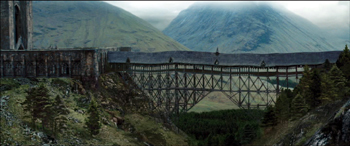
Extreme long shots:This form of shot is taken from a long way away, up to a quarter of a mile, and is used to give a general impression of the scene as not much detailed will be included in the shot due to the distance. It is generally used as an scene-setting/establishing shot as it gives the general impression  of what is about to take place; for example an exterior of a building or landscape within which action is taking/about to take place. The picture to the left is an example taken from Harry Potter, showing how this kind of shot can be used to set the scene and indicate to the audience where the next part of the story is about to take place.

Long shots:
Image result for long shot
Long Shot
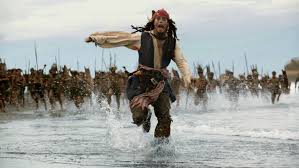
This shot is generally the one that is as close to 'life size' that cinema can get, corresponding between the real distance between the audience and the screen in a cinema. This can also be known as the full shot, which contains a full human body within the shot. This kind of shot adds more focus towards the characters, but still includes some of the background details thus giving the audience a rounded sense of what is going on. This can be seen in the image on the right, where we can see the whole of Captain Jack Sparrows body, but there is still a lot of background included.

Medium shots:
Image result for medium shots
Medium shot 
This shot is usally from the waist upwards, stereotypically used in dialogue scenes as it eadds more focus to the characters as it limits the amount of background that is included. There are a couple of different types of medium shots, including the Two shot, which quite simply includes two figures form the waist up, and the Three shot, which contains 3 figures from the waist upwards. Any shot that contains more than 3 figures tends to be a long shot as more than the minimal background gets included. Another shot in this category is the Over the shoulder shot, which positions the camera behind one of the figures so they can see their back, but can also see the other figure; thus the audience feels like the are looking over someones shoulder. In the image to the left is a classic example of a medium shot, it is close enough to be able to concentrate on the facial expressions of the characters, but not so close that everything else in the scene is blocked out.

Close up shots:
This type of shot shows very little background and focus in on one aspect of the scene, such as writing on paper or a facial expression; as depicted by the picture on the right. It is used to attract the audience's attention to the more important aspects of the mis-en-scene which the film maker really wants us to notice. Due to the closeness of the shot, it also creates a sense of intimacy with the audience as in real life we would only let people we really trust get into that proximity of us, so the audience feels closer to the character being shown.

Extreme close up

Extreme close up shots:
This type of shot usually focuses in on an aspect of the mis-en-scene very dramatically, magnifying beyond what the human eye would naturally be able to see. Therefore it would not contain any
background at all, drawing the audience's full attention to that particular aspect as they have no choice but look at what is contained in the shot. As shown in the picture on the left, it adds a lot more definition to the shot and can thus be used for dramatic effect; such as showing the emotion in someone's eyes.

Camera angles

Birds eye view:
Birds eye view
This depicts a scene from directly above, at a very unnatural angle to the point when sometimes it is difficult to recognise what is in the shot at first. This places the audience in an almost Godlike position, as whatever they are viewing is inferior to them, it is all part of the wider picture.

High angle:


High angle
This is when the camera is elevated so that the audience is looking down on whatever is in the shot, giving them more of a general overview. It can be used to make things/people seem less significant or scary as the audience is put under the impression that they are over whatever they can see.


Eye level:
This is when the camera is positioned as if a human was actual observing the scene, thus at 'eye level'. This can  make the audience feel more involved in the scene as it gives the impression that they are actually observing it as they are positioned as if they were there.

Low angle:
Low angle


This increases the height of any characters within the shot, and can be used to instil fear into the audience as they feel like they are dominated by the figure in the shot; or are powerless within an action scene. It can also create confusion as the viewer feels disorientated as most of the background in these kinds of shots are skies and ceilings, giving them a lack of detail about the setting.


Oblique angle:
This is when the camera is titled, to suggest an imbalance/transition/instability. It can be used to give a point of view effect, so the audience feels like they are witnessing the events from the perspective of the character.

Camera movement

Pans:
A movement of the camera horizontally, usually following an object/character in the centre of the shot or can also be used to set the scene and show the setting to the audience. The camera is placed on a stationary  axis to keep the camera level the entire shot.

Tilts:
This is the exact same as a panning shot, except instead of moving horizontally it moves vertically. It can be used to give the audience an entire view of a character, from head to foot.

Dolly shots:
This is when the camera is placed on a moving vehicle, for example a car or plane, and moves alongside the action; stereotypically following a character or object. This shot is very useful when tracking movement, such as in a car chase, or for acting as a transition between a long shot and a close up as the audience is gradually introduced to the character or object.

Hand held shots:
This kind of shot gives a jerky effect, as it is when someone just uses a hand held camera to capture the shot as the are going. It gives the audience a sense of realism, as they feel like they are part of the action rather than just someone watching detached from the scene.

Why use a selection of shots and angles? How does this add to the story telling?
It is important to use a range of shots and angles as it keeps the audience captivated, as if we used the same shot and the same angle repeatedly it would become boring to watch. It adds to the story telling as it allows the audience to see the scene in a variety of ways, so they have a deeper understanding of what is going on as they are led by the film maker with these different shots as to which parts of the mis-en-scene are the most important within telling that particular part of the story. The different camera shots and angles can also effect the relationship a viewer has with the content, for example lower angles are more likely to make the audience feel inferior to the character.

Examples of film openings where a particular shot/angle has been used to excellent effect:
Se7en: Within this opening there are a succession of close ups and extreme . They are so effective here as they create a sense of ambiguity amongst the audience due to how short the shots are; as it limits the amount of information actually available. Also, due to the lack of background, the viewer is forced to concentrate on the smaller details; creating further intrigue.

The Blair Witch Project:
The Blair Witch Project is probably the most iconic film for its usages of the hand held shot, which is introduced from the very opening scene. It uses this type of shot perfectly as it gives off a very homemade feel; which is very fitting with the nature of the film. It adds a sense of realism that we don't get very often in hollywood, it lacks the glossy feel that most feature films have, which is appealing to an audience as it is unique to most of the other films available.

Back To The Future:

Within the first two minutes of this film panning shots are used quite heavily. They are particularly effective here because they introduce the audience into a sense of quirkiness which is continued throughout the film. It allows the viewer to get the first inkling of the vibe of the film in a  very simple way; which is sometimes more effective than using an abundance of different shots and angles.

What effect do shorter shot lengths have?
Shorter shots usually connote an increase of action or something tense occurring within in the films plot. It can create dramatic tension, as the quick switches between shots means that the audience does not have time to focus on the detail within each shot, increasing the pace and action of the film. It can also be used to reflect a characters state of mind, as in an action packed scene the character is likely to be feeling jumpy and tense, which is paralleled with the quick cuts between shots. The most iconic usage of short shot lengths is probably within Hitchcock's Pyscho, where in the shower scene there is a rapid number of short shots that increases tension and even fear amongst the audience as it depicts the panic of the woman, and thus makes the audience feel panicked as well as it is quite  disorientating being presented with so many different points of view in such a small period of time.

What effect do longer shot lengths have?
Longer shot lengths can also be used to create tension as they give the impression of something impending about to happen. They allow the audience to hone in on the smaller details within the shot as they are exposed to them for longer, so they can be used to strike home a particular message or emotion that is important to plot; for example if the character is having a very serious conversation the shot may be longer at the end to give the audience more time to digest the information and thus increase its impact.


Thursday, 17 November 2016

Coursework Research : Target audience

What is a target audience?
This is the group of people at which a product, such as a film or advertisement, is aimed. Within the film industry it would be the demographic the fiilm is targeted at; for example young adults or 20-30 year old females.

What is the target audience for each of the following genres?

Comedy:
The target audience for comedy can vary dependant on the content of the film. For example films with a rating of  U or PG, such as pixar films, could have comedy within them for young children but also parents; as they are generally family orientated films, in comparison to those rated 12 or 15 as they would contain perharps more explicit content to create comedy so thus the target audience would be different as it would be aimed at older people.

Horror:
The stereotypical target audience for horror is between the ages if 15-25; as during young adulthood people tend to seek out for more of a rush or thrill, so can look to horror films for entertainment that will supply them with this. Futrhermore, a younger audience is more easy to excite and scare than an older, and they are less likely to be put off by the violence and unnatural images that horrow films contain than an older audience. It would not be aimed at people of a younger age due to the fact that a lot of the content would be deemed inapporiate for an audience of a younger demographic. Horror's are also usually aimed at men, as the stereotypical content of violence, blood guts and gore is associated with the male gender.

Action:
Action films are perhaps the most widley popular of all the genres, so they can be aimed at a much wider demographic of people from all ages, however I would say the majoity of people that view them would be from the ages of 12 to 40. It is defintiley more geared towards males as the content is generally what is percieved to be 'masucline', e.g violence, guns, car chases, sex, drugs etc.

Drama:
This is another genre that can be aimed at a large group of people as it is very dependant on its content. Due to this there are lots of sub-genres such as romatic drama, period drama or crime which would all be aimed at different target audiences. Drama films are usually aimed at the young mature, or an older audience, of both genders, due to the strong scripts drama films offer and how they can vary drastically dependant on the characters within them.

Romance:
Romance films can have an age range from about 13 to 55  as they are quite easy to watch so can appeal to a large range of ages. They are typically aimed at females as women are seen to be as more in touch with their emotions and more sentimental, so therefore romance films would appeal to that sentiment so they are more likely to choose to watch them. People who are in couples can also be a target audience as they are more likely to be able to relate to the content of the film and thus are more likely to enjoy watching them.


What would be the target audience for my 'idea so far' and how would I go about attracting these people to watch my film?
The target audience for my idea so far would be people form the ages of 14-25 as it is a kind of surrealist idea of a boy getting stuck in a computer screen, and it is the younger ages that are more assocaited with technology thus it is more likely to intrigue people of these ages. I would say that is is evenly geared to both genders as it is quite a neutral idea that doesn't contain any particular content that would make it preferable to one gender more than another, such as gun violence.

I would use social media as a platform to try and appeal to my target audience as stereotypically that demographic is always on social medias such as facebook or twitter, so it would be easy to use these to try and advertise  my film as it would be accessible to a large range of people. Furthermore, having the trailer play as an advert on youtube vidoes would also be a good way to gain publicity as a lot of people use youtube as a platform for enterainment. Having the trailer played before similar films would also be effective as it would present the film to people who are already interested in films like it, so my film would have a better chance of appealing to them.


Wednesday, 16 November 2016

Coursework Research:Setting


What is setting?
 Setting is defined as 'the place or type of surroundings where something is positioned or where an event takes place.' It is bascially the backgorund to whatever scene is taking place and supplies the character with the place for the scene to unroll. A good setting can make or break a scene; it has to be suitable for what is taking place otherwise all the rest of the mis-en-scene will be off and thus detract from the overall effect and impact of the film. Setting can almost act as an extension of the character, it should fit their actions and movemnts to add to the impact rather than detract from them.

What are the conventional settings for the following genres?

Comedy:
Image result for inbetweeners

The setting for comedy is always in a bright and colourful place; stereotypically in social situations such as a night club or party. An example of this would be the Inbetweeners Movie which is set on holiday: a bright place so the audience is put into the mindset of the fact the film is going to be more light-hearted and thus is more likely to find it entertaining compared to if it was set in a gloomy place. 


Horror:
The usual setting for horror films are usually dark, mysterious and isolated. Examples of stereotypical settings wouold be haunted houses, urban environments, dark streets etc. Anywhere that creates a sense of foreboding to allow the audience to acknowledge that if the setting is dark and miserable, the events of the film are most likely to be as well. Most of the settings in horror also have a dark backgorund; somethind dreadful has happened in the past thus foreshadowing events of the future. This can be seen in films like the Woman In Black with Eel Marsh House, within the grounds of which a terrible accident had happenened killing a ladies son. 

Action:
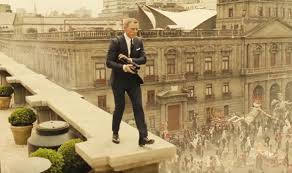
Image result for james bond scenes cityAction usually takes place in busy settings; somewhere which will allow for lots of things to able to take place and aid the unrolling of the plot. For example a lot of action films take place in big cities, where there are lots of things going on so as to add to the hectic impact when the scene takes place. This is because having a charcter run through the city adds to the sense of speed and danger as there are far more obstacles in their way, in comparison to the countryside, foe example. This can be seen in a lot of the James Bond films; where a majority of the big chase scences are set on busy streets. 


Drama:
Drama films can be set in a lot of different places, they are stereotypically based more on the
 life of a character and the emphasis is on provoking emotion in the audience by revealing events of this characters life. Therefore the setting of drama films has to be suitable to make the audience believe in the situation; it has to be realsitic. However it also has to be interesting enough to help captavate the audience, so it isn't too boring. Examples of typical settings of drama films would be schools, neighbourhoods, a work place; anywhere which a realistic situation could take place. This could differ dependant on the time frame of the film. e.g War Horse is set in the war but is still a drama film; but that setting is realstic due to the nature of the stroyline. 

Romance:
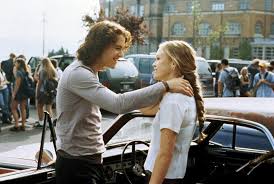
Image result for 10 things i hate about you movieRomance films are usually set in an environment within which two people would stereotypically meet. For example, places like school, work or at a conference, or at a party would all be suitable settings for romance as they are sitautions within which the audience could imagine meeting people; making the scenrio more relatbale and thus more believable. Futhermore, the audience is more likely to become emotionially invested in the characters and their storyline together if how they came to be together it believable, therfore having the correct setting is crucial. An example of a typical romance film would be 10 things I hate about you, where the two characters meet through high school. 


Sunday, 13 November 2016

Coursework Research: Character

What is a character??
A character is the representation of a person within a film/book that depicts who they are within a narrative.

How important are characters in the opening 2 minutes of a film ??
Personally, I think this is dependant on the approach the film takes to draw the audience in the first few minutes. If it is an action film and the first two minutes are quite hectic and full of lots of different shots of different things going on, then the characters are less important as the main focus is on the plot and that is was intrigues the audience to keep on watching; such as in Amores Perros. However if the beginning of a film is more subtle, then the characters become much more important as it begins to rely on them to intrigue the audience. This doesn't have to mean that loads is revealed about them in the first 2 minutes, just enough to spark curiosity amongst the audience to convince them that they want to find out more about the character. For example, the opening scene to Forrest Gump reveals hardly anything at all about the character, but the way he handles himself creates a sense of curiosity that acts as an incentive for the audience to keep watching; as in the end it is the character that they are watching the film to find out about.

Character profiles:

The Breakfast Club: John Bender
John Bender is an iconic character because from the first second of the first scene he is in stands out as a unique character, even though he doesn't actually say anything or feature more than any of the other characters. He doesn't do much to add to the narrative than be other teenager who has a Saturday detention; but we learn a lot about him just from the way he behaves. He turns up on foot, unlike the other characters, instantly making him stand apart from the others; as well as suggesting perhaps he isn't as well off or his parents aren't so fussed about his whereabouts. He doesn't stop for the car, depicting him as arrogant which is furthered still in the opening when he makes someone else move out of a seat so he can sit down even though there are plenty of other chairs. As an audience we are not directly told anything about him, but we can decipher certain things from actions such as these and thus learn a fair amount about him in the first two minutes.

Peter Pan : Wendy Darling 

Wendy is iconic because she displays what is it is to be a growing child; she still believes in the fairytales yet believes she knows how to be adult. She represents that awkward phase of growing up when you think you know everything yet you are still naive to a lot of things ; thus she is relatable to both children and adults. She adds to the narrative because she is the lead story teller of Peter Pan, thus the majority of the plot unfolds due to the tales she tales and the belief she has in him. In the opening two minutes we learn that Wendy is a big Peter Pan fan, and that she acts maturely because she is not joining in with her brothers play fighting; yet she does not discourage the fantastical tale that they are telling, in fact she corrects them on the details, so she is obviously still in that child like sentiment. The audience doesn't find out  great deal more about her personally in the first two minutes, but we can infer from the other characters and setting that she is a middle class girl who believes in fairytales.

The Curse of the Black Pearl : Captain Jack Sparrow 


Captain Jack Sparrow is iconic because he is so recognisable and instantly comes across as a funny yet intriguing character. He aids the narrative because it mainly about him thus his character helps the telling of the story by revealing major parts of the plot. He doesn't actually say anything in the first 2 minutes of the film, yet he manages to get across a lot about his character; such as the fact he is a pirate who respects others like him and also is quirky as he proudly stood on the mast of his sinking ship and just stepped off of it like it didn't matter. This introduces the audience as to what a fun character he is; although he still maintains ambiguity as to what he is doing thus intriguing them to know more.

Wednesday, 9 November 2016

Coursework Research:Breaking the fourth wall

What is it?
The fourth wall is a term used to describe the metaphorical 'wall' between actors and an audience. No such wall actually exists, but it refers to the fact that the actors pretend that the audience is not there; thus giving the audience the sensation that they are watching in on something, like a fly on a wall. The fourth wall in the terms of film is a camera lens. To break the fourth wall is to acknowledge the fact that the audience is there, so to talk to directly to them within a scene. This stops the illusion that the actors are unaware of the fact that they are there, and can thus make the audience feel like they are interacting with the film/tv show in a way that they wouldn't if the fourth wall had not been broken. It is a technique stereotypically used in comedies/dramas.

Examples:
Ferris Beuller's Day Off

Deadpool


The Big Short


Would I consider using it in my own coursework?
Although I think it is a really good technique to keep the audience involved and works really in certain genres, such as comedy, I am not sure yet if I would want to include it in my own work because it doesn't really fit with any of the ideas that I have at the moment as I want to go for more of serious vibe, which I feel would be difficult to create with this technique.`Furthermore, if i wanted to introduce more that one character it would be difficult to do this technique well, and still have time within the 2 minutes to bring in other potential characters aswell. However this being said, I would like to try and include it in my work at some point in the future and my ideas may develop into a different route to what I originally planned, in which case I would be open to trying to incorporate it.